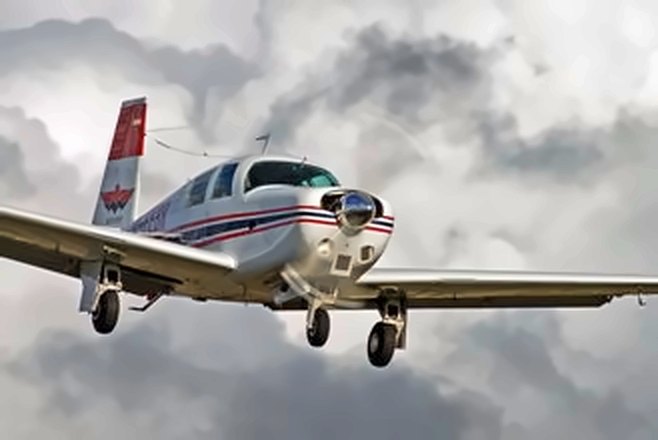
Commercial Pilot License (CPL) Training at Multifly prepares qualified pilots for professional commercial flight operations under EASA requirements.
Multifly conducts the course in accordance with EASA Part-FCL requirements within a structured, airport-based training environment.
Depending on previous qualifications, students can follow either the standard CPL flight training course or the reduced pathway available to eligible Instrument Rating holders.
The Commercial Pilot License allows pilots to exercise commercial flying privileges in accordance with the applicable EASA licensing requirements.
For example, CPL holders can progress into professional flying roles and continue toward advanced airline-oriented qualifications.
Moreover, CPL Training develops precision, standardization, workload management, and professional decision-making while building on previous flight experience.
CPL Training Structure
Multifly offers two CPL Training pathways depending on the candidate’s existing qualifications and training history.
CPL with Instrument Rating (IR holders)
Eligible pilots who already hold a valid IR(A) complete at least 15 hours of dual visual flight instruction.
The training focuses on:
Commercial operating procedures
Advanced aircraft handling
Navigation accuracy and workload management
Abnormal and emergency procedures
CPL without Instrument Rating
Applicants without an IR complete at least 25 hours of dual flight instruction, including the applicable instrument training requirements.
As a result, the training pathway adapts to the candidate’s previous qualifications while meeting the applicable Part-FCL requirements.
Multifly conducts CPL flight training using aircraft approved for use within the academy’s ATO training program.
All CPL flight training is conducted on EASA-approved aircraft from the academy fleet.
CPL Typical Duration
The average completion time is approximately 15 days to 1 month. However, the exact duration depends on weather conditions, student availability, and individual training progress.
In addition, favorable flying conditions and structured scheduling can help students complete CPL Training efficiently.
CPL Training Entry Requirements
Applicants must meet the applicable EASA Part-FCL requirements for their selected CPL Training pathway.
License requirement: Valid EASA PPL(A)
Medical certificate: Valid EASA Class 1 Medical Certificate
Instrument Rating: Required for the reduced 15-hour CPL pathway; applicants without a valid IR follow the applicable standard CPL training pathway
Flight experience: Minimum 200 hours of total flight time before the CPL skill test, including the applicable Part-FCL experience requirements
English proficiency: Sufficient English proficiency for training and licensing requirements
What Is Included in CPL Training?
The CPL Training program includes the core elements required to prepare for the applicable course and skill test:
CPL flight training according to the selected pathway
Use of academy aircraft and facilities
Instructor supervision and training support
Airport-based training environment
Moreover, Multifly places strong emphasis on standard operating procedures, safety, and professional conduct.
CPL Training Within a Modular Career Path
CPL Training represents an important practical stage within the modular professional pilot pathway.
As a result, Multifly students can continue through a structured modular pathway toward professional pilot qualifications.
Frequently Asked Questions
Q: Do most students complete the 15-hour or 25-hour CPL course? A: Most students complete the 15-hour CPL course, as they already hold a valid Instrument Rating before starting CPL training.
Q: Is 200 hours required before starting CPL training? A: No. The 200-hour requirement applies before the CPL skill test, not before starting the course.
Q: Can simulator time be counted toward the 200 hours? A: Yes. Up to 5 hours may be credited from an approved simulator, in accordance with EASA regulations.